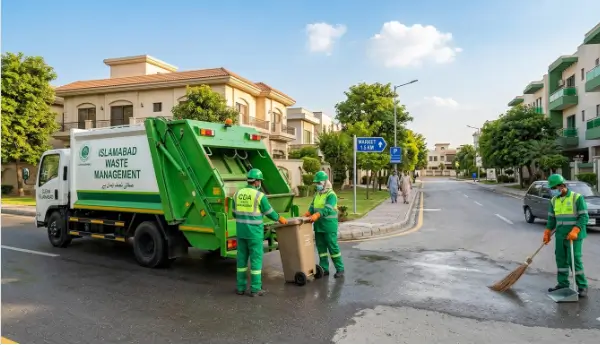
Suthra Punjab is a large-scale cleanliness campaign aimed at improving sanitation across all districts. It includes modern waste management systems and door-to-door garbage collection.
The initiative enhances public health and urban aesthetics. It also creates employment in sanitation services.
This program reflects the government’s commitment to a clean and healthy Punjab.
Imagine a Punjab where you don’t have to hold your breath while walking past a heap of garbage. Imagine villages with dust-free lanes, cities with sparkling public squares, and drains that actually flow instead of clogging up.
That vision is no longer a distant dream. Chief Minister Maryam Nawaz Sharif’s “Suthra Punjab” (Clean Punjab) initiative has officially launched—and it is being called Pakistan’s largest province-wide sanitation and waste management program to date.
But is it just another government campaign, or a genuine turning point for environmental sustainability and public health? Let’s break it down.
The Big Goal: Zero Waste in 90 Days
Let’s start with the headline: “Zero Waste Punjab” within three months.
Yes, you read that correctly. The provincial government has set an ambitious 90-day deadline to eliminate visible waste across both urban and rural areas. From the busy streets of Lahore to the smallest villages in the south, the message is clear: cleanliness is no longer optional—it’s a shared responsibility.
What Makes Suthra Punjab Different?
We’ve seen cleanliness drives before. They start with a bang and fade away within weeks. So what’s different this time?
1. Integrated Waste Management
Instead of isolated efforts, Punjab is implementing a standardized sanitation system across every city and village. Whether you live in a metropolitan hub or a remote hamlet, the cleanliness standards will be the same.
2. Public-Private Partnership
The government isn’t going it alone. By collaborating with private sector entities, the initiative aims to bring corporate efficiency, innovation, and sustainability to a sector traditionally plagued by bureaucracy.
3. Tech-Driven Accountability
This is where Suthra Punjab gets really interesting. The program includes:
-
Picture-based attendance for sanitation workers
-
Check-in/Check-out tracking
-
Geo-tagged data to prove work was done at the right location
-
Time-stamped pictures for verification
-
User-friendly dashboards for real-time monitoring
Gone are the days of “ghost workers” getting paid for nothing. Now, every sweep, every drain desilted, and every waste collection has a digital footprint.
The Ripple Effect: Beyond Just Cleaner Streets
A clean Punjab isn’t just about aesthetics. The initiative promises a cascade of positive impacts:
-
Cleaner streets, cities, towns, and villages – The most visible change.
-
Restoration of public gathering spaces – Parks, plazas, and community centers will become usable again.
-
Improved air quality – Less open burning of waste means fewer respiratory illnesses.
-
Healthier living conditions – Reduced breeding grounds for mosquitoes and rodents.
-
Enhanced living standards – Pride in one’s environment leads to better community behavior.
-
Positive impact on tourism – First impressions matter for domestic and international visitors.
-
Generation of employment opportunities – From waste sorters to monitoring staff, jobs are being created.
How It Works on the Ground
The “Suthra Punjab” initiative isn’t just a policy document—it’s a massive operational rollout. Key activities include:
-
Manual sweeping of streets and public areas
-
Door-to-door waste collection to eliminate illegal dumping
-
Desilting of drains to prevent flooding and waterborne diseases
-
Open heaps clearance – targeting those ugly, smelly mounds that blight neighborhoods
-
Activity tracking to ensure consistent performance
Will It Succeed?
Let’s be honest: 90 days is an incredibly short time to clean an entire province the size of Punjab. Skeptics will point to past failed campaigns, lack of public cooperation, and the sheer volume of waste generated daily.
However, three factors give Suthra Punjab a fighting chance:
-
Political will from the top – With the Chief Minister personally championing it, accountability is high.
-
Technology as an enforcer – Real-time, geo-tagged data makes excuses difficult.
-
Private sector efficiency – Bypassing slow government processes could accelerate results.
The real test won’t be day 90, though. It will be day 365. Can the momentum be sustained? Can citizens change their own habits—like littering and mixing waste—to support the system?
Final Thoughts
Maryam Nawaz Sharif’s Suthra Punjab initiative is bold, ambitious, and desperately needed. For too long, Punjab’s sanitation crisis has been treated as an unsolvable problem. Now, for the first time, we’re seeing a comprehensive, tech-enabled, province-wide strategy.
Will Punjab become truly “Suthra” within three months? Perhaps not entirely. But if this initiative succeeds in building lasting systems, changing public behavior, and holding everyone accountable—from sweepers to supervisors—then it will mark a historic shift.
Cleanliness is no longer just a slogan. It’s a program. And it’s underway.
What do you think? Can Punjab achieve Zero Waste in 90 days? Share your thoughts in the comments below.
