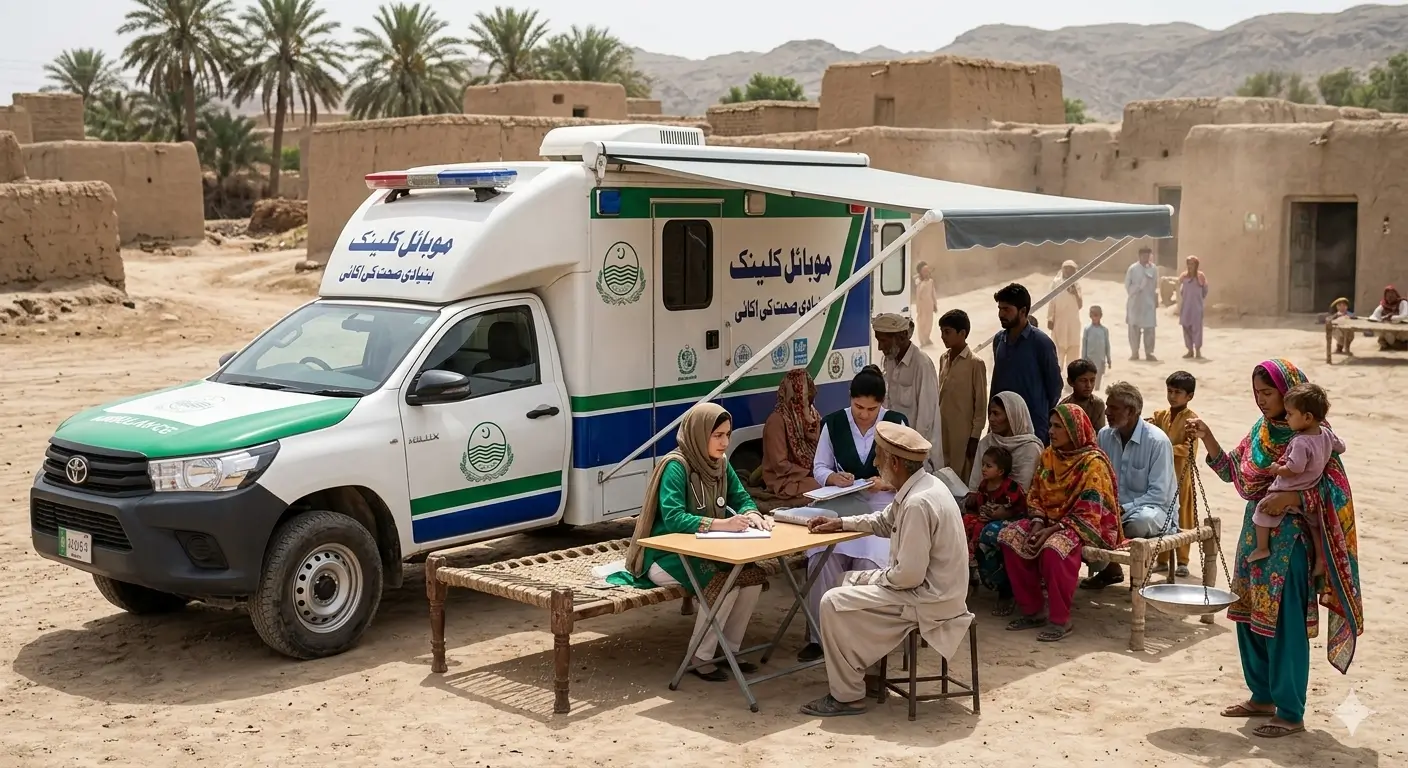
Clinic on Wheels provides healthcare services to remote areas. Mobile units equipped with medical staff reach underserved communities.
This initiative improves healthcare accessibility and early disease detection.
It is crucial for rural development and public health.
For millions of Pakistanis living in remote villages and far-flung rural areas, a simple visit to the doctor can feel like an impossible luxury. The nearest basic health unit might be hours away—on foot, across broken roads, or at the mercy of expensive, unreliable transport.
But what if the doctor came to them?
That’s exactly the idea behind “Clinic on Wheels” —a mobile healthcare initiative that is quietly revolutionizing how medical services reach Punjab’s most underserved communities.
More Than Just a Van
Let’s be clear: Clinic on Wheels is not a makeshift first-aid post on tires. These are fully equipped mobile medical units staffed with trained healthcare professionals. Think of them as a hospital room that travels.
Each unit typically includes:
-
A medical officer or doctor
-
A lady health visitor or nurse
-
A dispenser for medicines
-
Basic diagnostic equipment (blood pressure monitors, glucose testers, etc.)
-
A supply of essential medicines
When this vehicle rolls into a village, it doesn’t just park—it opens a temporary clinic.
Where Does It Go?
The program specifically targets underserved communities—places that fall through the cracks of the traditional healthcare system. These might include:
-
Remote rural settlements far from any government health facility
-
Farm labor colonies with transient populations
-
Areas with high maternal and child health needs
-
Communities with no access to regular check-ups or disease screening
By design, Clinic on Wheels goes where permanent clinics cannot—or have not yet—been built.
Why This Matters for Public Health
The impact of this initiative goes far beyond convenience. Here’s what Clinic on Wheels brings to the table:
1. Improved Healthcare Accessibility
Distance and cost are two of the biggest barriers to healthcare in rural Pakistan. By bringing services directly to people’s doorsteps—often free or at very low cost—the mobile clinic removes both obstacles at once.
2. Early Disease Detection
In remote areas, people often wait until a minor illness becomes a major crisis before seeking help. By that point, treatment is harder and more expensive. Clinic on Wheels enables early screening for conditions like:
-
Hypertension
-
Diabetes
-
Anemia (especially in pregnant women)
-
Common infections
-
Malnutrition in children
Catching these problems early saves lives and reduces the burden on tertiary hospitals.
3. A Crucial Tool for Rural Development
Health and development go hand in hand. A sick population cannot work, learn, or thrive. By improving rural health outcomes, Clinic on Wheels contributes to:
-
Higher workforce productivity
-
Lower household medical expenses
-
Reduced child and maternal mortality
-
Better school attendance (healthy kids go to class)
In short, healthy villages are developing villages.
4. Strengthening Public Health Surveillance
Mobile clinics also act as data collection points. They can track disease outbreaks, vaccination coverage gaps, and emerging health trends in real time—information that helps the government allocate resources more effectively.
The Human Impact: A Story That Repeats Itself
Imagine a 60-year-old farmer in a remote corner of southern Punjab. He has had a persistent cough for months but ignores it because the nearest hospital is a four-hour round trip. One day, the white van of Clinic on Wheels arrives in his village. He walks over, gets checked, and is diagnosed with a treatable chest infection—not something worse. He receives medicines on the spot.
Or consider a pregnant woman in her third trimester who cannot afford repeated trips for check-ups. The mobile clinic visits every two weeks, monitors her blood pressure and baby’s growth, and catches signs of pre-eclampsia early.
These are not hypotheticals. This is the daily reality that Clinic on Wheels enables.
Challenges and the Road Ahead
Of course, no initiative is without hurdles. For Clinic on Wheels to reach its full potential, several factors need sustained attention:
-
Regular maintenance of vehicles – A broken-down clinic helps no one.
-
Consistent medicine supply – Patients lose trust if the van arrives but the drug box is empty.
-
Geographic coverage – Punjab is large. How many mobile units are needed to truly serve every remote pocket?
-
Coordination with static facilities – Mobile clinics should refer, not replace, permanent health centers for serious cases.
Final Thoughts
Clinic on Wheels is not a flashy, headline-grabbing program. It doesn’t build massive hospitals or unveil high-tech equipment. But it does something arguably more important: it meets people where they are.
In a province where rural communities have long felt forgotten by the healthcare system, a mobile clinic sending a clear message: We see you. We haven’t left you behind.
For rural development and public health in Punjab, that message—and the service behind it—is nothing short of transformative.
