
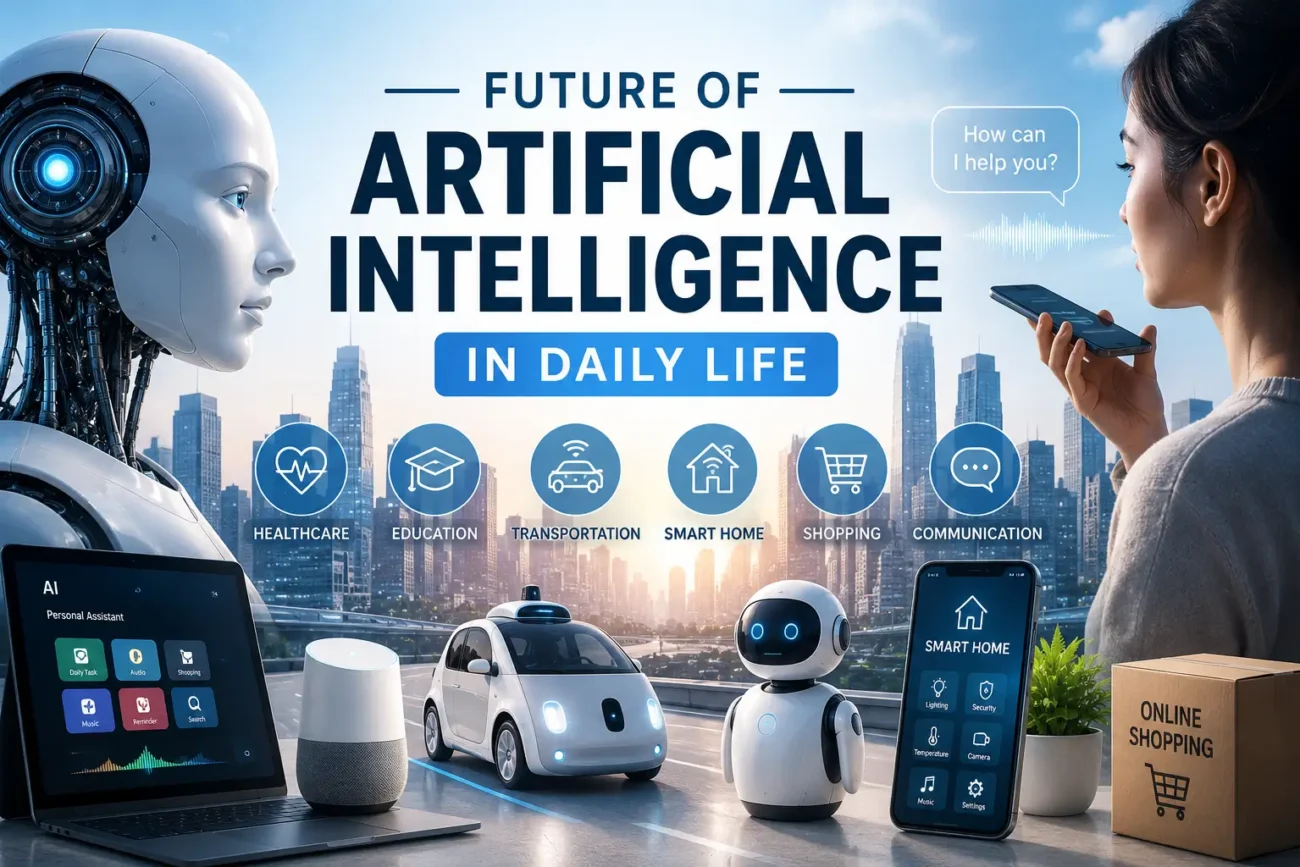
Artificial Intelligence, also called AI, is changing the world very fast. A few years ago, AI sounded like something from science fiction movies. Today, it is already part of our daily life. From smartphones to online shopping, AI is helping people save time, work smarter, and live more comfortably.
The future of Artificial Intelligence in daily life looks even more exciting. AI technology is expected to become smarter, faster, and more useful in the coming years. Many experts believe AI will improve healthcare, education, transportation, communication, business, and home life.
In this article, we will explore how AI is shaping the future and how it may affect our everyday lives.
What Is Artificial Intelligence?
Artificial Intelligence is a type of technology that allows machines and computers to think and learn like humans. AI systems can understand information, solve problems, make decisions, and even talk with people.
Some common examples of AI include:
- Voice assistants like Siri and Alexa
- Chatbots on websites
- Netflix and YouTube recommendations
- Self-driving cars
- AI writing tools
- Face recognition in smartphones
AI uses data and machine learning to improve over time. The more information it gets, the smarter it becomes.
To learn more about AI technology, visit IBM Artificial Intelligence Guide.
How AI Is Already Part of Daily Life
Many people use AI every day without even noticing it. AI is working quietly in the background to make tasks easier and faster.
AI in Smartphones
Smartphones are one of the biggest examples of AI in daily life. AI helps phones:
- Improve camera quality
- Suggest text while typing
- Translate languages
- Unlock devices with face recognition
- Organize photos automatically
Apps like Google Maps also use AI to show traffic updates and the fastest routes.
AI in Online Shopping
Online shopping websites use AI to understand customer behavior. When you shop online, AI recommends products based on your interests and previous searches.
AI also helps businesses by:
- Managing inventory
- Predicting customer needs
- Improving delivery services
- Providing chatbot customer support
Companies like Amazon use AI heavily to improve the shopping experience.
AI in Entertainment
AI is changing entertainment in many ways. Streaming platforms like Netflix and Spotify use AI to recommend movies, shows, and music based on your interests.
Social media platforms also use AI to show content that users may enjoy. This helps people discover new videos, trends, and creators.
Future of AI in Healthcare
Healthcare is one of the most important areas where AI will create major changes in the future.
Faster Disease Detection
AI systems can study medical data and detect diseases earlier than humans in some cases. Doctors may use AI tools to identify:
- Cancer
- Heart disease
- Diabetes
- Brain disorders
Early detection can save lives and improve treatment.
Virtual Health Assistants
In the future, AI-powered virtual assistants may help patients 24/7. These assistants could:
- Remind people to take medicine
- Answer health questions
- Monitor patient conditions
- Schedule doctor appointments
AI may also reduce pressure on hospitals and healthcare workers.
Personalized Treatment
AI can study patient history and create personalized treatment plans. This means patients may receive treatments designed specifically for their needs.
Organizations like World Health Organization AI Health Research are already studying the future role of AI in healthcare.
AI in Education
The future of education will also change because of Artificial Intelligence.
Smart Learning Systems
AI can help students learn at their own speed. Smart learning apps may identify weak subjects and provide extra practice.
Benefits of AI in education include:
- Personalized lessons
- Instant feedback
- Better online learning
- Improved student performance
Teachers may use AI tools to save time on grading and lesson planning.
Language Translation
AI translation tools are becoming more accurate every year. In the future, students may easily learn from teachers around the world without language barriers.
This can improve global education opportunities.
AI in Transportation
Transportation is another area where AI will play a huge role in the future.
Self-Driving Cars
Self-driving cars are already being tested in many countries. These vehicles use AI sensors and cameras to understand roads and traffic.
Future benefits may include:
- Fewer accidents
- Reduced traffic
- Lower fuel use
- Easier travel for elderly people
Although fully autonomous cars are still developing, they may become common in the future.
Smart Traffic Systems
AI can improve city traffic systems by controlling traffic lights and reducing congestion. This can save time and lower pollution levels.
Many smart cities are already using AI to improve transportation.
AI in Smart Homes
Smart homes are becoming more popular every year. AI-powered devices can make homes safer and more comfortable.
Voice-Controlled Devices
AI assistants like Alexa and Google Assistant allow people to control:
- Lights
- TVs
- Air conditioners
- Security cameras
People can manage their homes using simple voice commands.
Home Security
AI security systems can detect unusual activities and send alerts to homeowners. Some cameras can recognize faces and identify strangers.
This improves home safety and peace of mind.
AI in Business and Jobs
AI is changing workplaces around the world.
Automation of Repetitive Tasks
Businesses use AI to automate repetitive work such as:
- Data entry
- Customer support
- Scheduling
- Inventory management
This helps companies save time and reduce costs.
New Job Opportunities
While some jobs may disappear because of automation, AI will also create new careers.
Future AI-related jobs may include:
- AI engineers
- Data analysts
- Machine learning specialists
- AI ethics experts
- Robotics technicians
People who learn digital skills may have better career opportunities in the future.
AI in Daily Communication
Communication is becoming smarter because of AI.
AI Chatbots
Many websites now use AI chatbots to answer customer questions instantly. These chatbots are available 24/7 and improve customer service.
Real-Time Translation
AI translation apps can help people speak with others in different languages. Future AI systems may allow smooth conversations between people from different countries.
This can improve travel, business, and education.
Benefits of Artificial Intelligence in Daily Life
AI offers many advantages for people and businesses.
Saves Time
AI automates tasks quickly, helping people focus on more important work.
Improves Accuracy
AI systems can reduce human errors in many industries.
Better Convenience
AI-powered tools make life easier through automation and smart assistance.
Increased Productivity
Businesses can complete work faster using AI technology.
Better Decision Making
AI can study large amounts of data and provide useful insights.
Challenges and Risks of AI
Although AI has many benefits, there are also some concerns.
Privacy Issues
AI systems collect large amounts of data. This raises concerns about personal privacy and data security.
Job Displacement
Some jobs may be replaced by machines and automation. Workers may need new skills to adapt.
Dependence on Technology
People may become too dependent on AI systems for everyday tasks.
Ethical Concerns
AI decisions must be fair and unbiased. Governments and companies will need proper rules to control AI use.
Future Predictions for AI
Experts believe AI will become even more advanced in the next decade.
Future possibilities may include:
- AI-powered robots in homes
- Smarter healthcare systems
- Fully automated transportation
- Advanced virtual assistants
- AI teachers and tutors
- Smart cities with AI management
AI may also become more human-like in communication and problem-solving abilities.
How People Can Prepare for the AI Future
People can prepare for the future of AI by learning digital and technology skills.
Important skills may include:
- Computer knowledge
- Data analysis
- Coding
- Problem-solving
- Creativity
- Communication skills
Schools and businesses may also need to adapt to AI-driven changes.
Conclusion
The future of Artificial Intelligence in daily life is full of opportunities and changes. AI is already helping people through smartphones, healthcare, education, transportation, and smart homes. In the coming years, AI may become even more powerful and useful.
While AI offers many benefits like convenience, speed, and better decision-making, it also brings challenges such as privacy concerns and job changes. The key is to use AI responsibly and prepare for the future with the right skills and knowledge.
Artificial Intelligence is not just the future anymore. It is already becoming a major part of everyday life, and its impact will continue to grow across the world.
